Coaching the COO Through Culture Change During a High Stake Merger
The challenge
Network Solutions is undergoing a period of intense disruption—marked by a high-stakes merger, layoffs, and urgent mandates for operational transformation. The newly appointed COO was tasked with leading this change and quickly encountered a deeply entrenched culture of resistance:
Accountability felt punitive instead of empowering
Competing priorities and toxic cross functional collaboration
Reactive communication
The organization urgently needed a reset—starting from the top.
The engagement
Over 12 months, the COO engaged in a focused executive coaching program centered around five change leadership principles. The goal was to lead his executive team through disruption by building trust, restoring alignment, and empowering cross-functional collaboration and execution.
Key program elements
Executive coaching to strengthen leadership presence, influence, and emotional intelligence.
Real-time feedback loops using team communication diagnostics and pulse check-ins.
Executive team facilitation to connect the dots and model new leadership behaviors
Cross-functional decision-making framework to reset, re-align and improve commitment to intentional, transparent and measurable results
Custom accountability blueprint to replace blaming, shaming and unproductive conflict.
Phase 1: Focused on nurturing collaboration by helping the team appreciate their different workstyles and creating a culture of trust, mutual respect, essential dialogue amid uncertainty, and leading through transparency and emotional steadiness.
Phase 2: Focused on clarifying roles and expectations of key members of the executive team. We deep dived into the culture to get to the root cause of unproductive conflict. We crafted a structured cross-functional, problem-solving teams that were specifically trained to engage in healthy dialogue, model clarity, consistency and courage. We created specific frameworks to help the team objectively assess the root cause of problem, connect the dots, and identify effective, long-term solutions using the importance-impact model for change.
Phase 3: Focused on identifying culture elevators and minimizers. Leadership behaviors that model clarity, consistency, and courage were designed to cascade and elevate team conversations. Principles of the Leader Shadow were used to help middle managers identify their daily actions, intended behaviors and frustrations.
Measurable outcomes
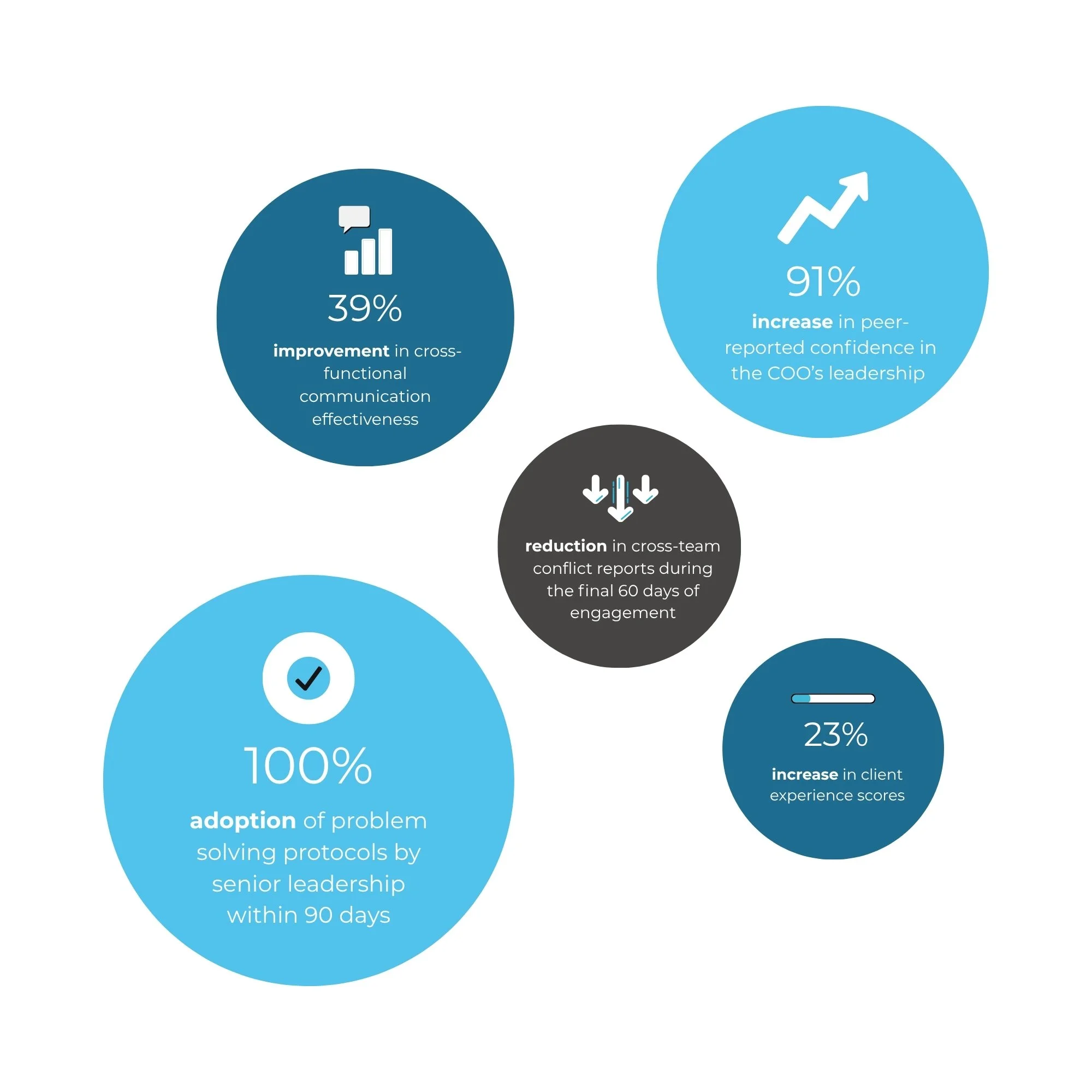
The transformation
The COO’s evolution—from task-driven work horse to intentional, people-centered leader—set the tone for sustainable transformation. The leadership team began to shift from a crisis-management mindset to a more intentional, collaborative model rooted in alignment, mutual ownership, and effective accountability measures. Conversations moved from defensive to strategic and cross-functional collaboration shifted from siloed to systems thinking.
“We stopped managing the crisis and started leading through it. What changed first was us—and then everything else began to shift.”