Your competition is often internal, not external.
Operational excellence is not just about efficiency—it’s about trust, experience, and sustainability. Processes fail when we ignore the people who run them.

Why it matters
Organizations that combine process excellence with people-centered practices achieve 37% higher revenue growth and significantly lower attrition. Yet too many improvement efforts collapse before they launch.

Our approach
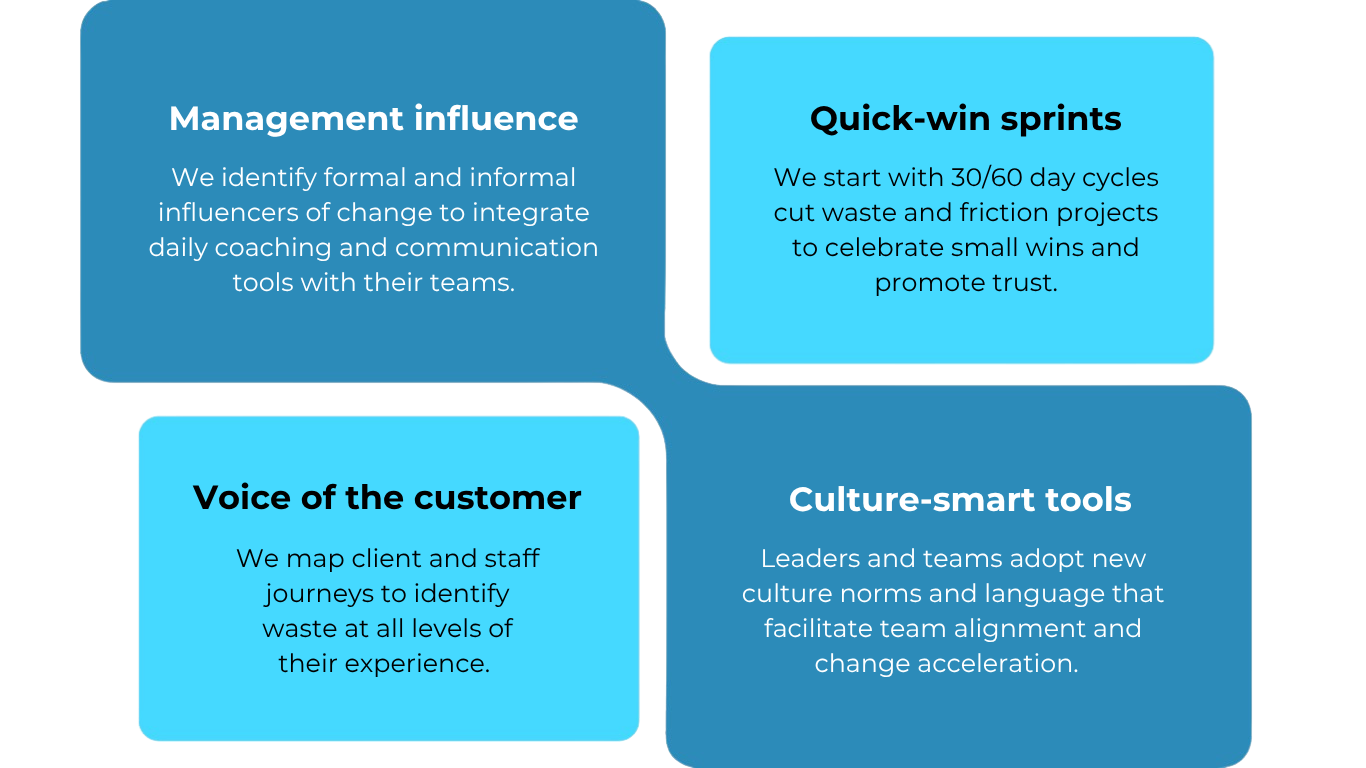
Doing more with less
In one healthcare system, the claims department team was stuck in turnaround times. Redundant approvals slowed files for days. Priorities shifted weekly, creating confusion. Staff felt unheard, and leaders defaulted to micromanagement.
We started by mapping the claims journey through the eyes of both employees and patients. The picture was clear: duplicate sign-offs, inconsistent escalation rules, and communication gaps were adding unnecessary days.

We launched a 60-day quick-win sprint. Leaders were coached to step back from managing approvals and instead coach their teams daily, consistently during the start and end of shift.

Informal leaders were encouraged to step in and support new team members as needed. With strategic planning, processes were streamlined, bottlenecks removed, and new “fast-lane” rules for routine claims were piloted.
The result
Turnaround time dropped by 28% in just 90 days. Employees reported greater clarity and morale improved, while physicians experienced quicker resolutions.
Most importantly, leaders began influencing change through trust and communication—rather than micromanaging—setting the stage for sustained improvement.
Why clients choose us
We realize that process charts don’t shift behavior—leaders do. We align the technical to the human side of change.